A British royal portrait, Bengali lettering, a crescent, a mountain: Pakistan’s money preserves histories that its name alone cannot tell. Following the images and the workshops reveals how an inherited unit became a sign of sovereignty.
Before the rupee: the routes of the Indus
Long before Pakistan was founded, the Indus region, Gandhara and Punjab belonged to far-reaching networks of exchange. Their monetary history begins with small punch-marked silver pieces, Indo-Greek coins and later Kushan issues rather than a banknote printed in Karachi. The State Bank of Pakistan Museum brings these successive worlds together without turning them into the coinage of a modern nation.
An ancient coin was both a means of payment and a statement of authority. A portrait, deity, script or mint mark can reveal who produced it and which audiences it addressed. Bilingual Indo-Greek coins remind us that exchange already crossed linguistic boundaries. They were neither rupees nor “Pakistani coins” in the modern national sense.
The coinages of rulers in Sindh, the sultanates and later empires brought different inscriptions and religious references. Two overlapping stories therefore need to be distinguished: the very old history of money used in this territory, and the later history of the rupee as a recognisable coin and name. Reading one as the other would erase much of the region’s diversity.
A silver coin outlives empires
Sher Shah Suri’s reign, from 1540 to 1545, provides a decisive landmark. His silver rupiya, with a reference weight of about 178 grains or 11.5 grams, gives the rupee’s history a tangible object. The name belongs to an older family of words associated with silver and worked metal. Sher Shah did not invent exchange or coinage; he consolidated a standard with a remarkably long afterlife.
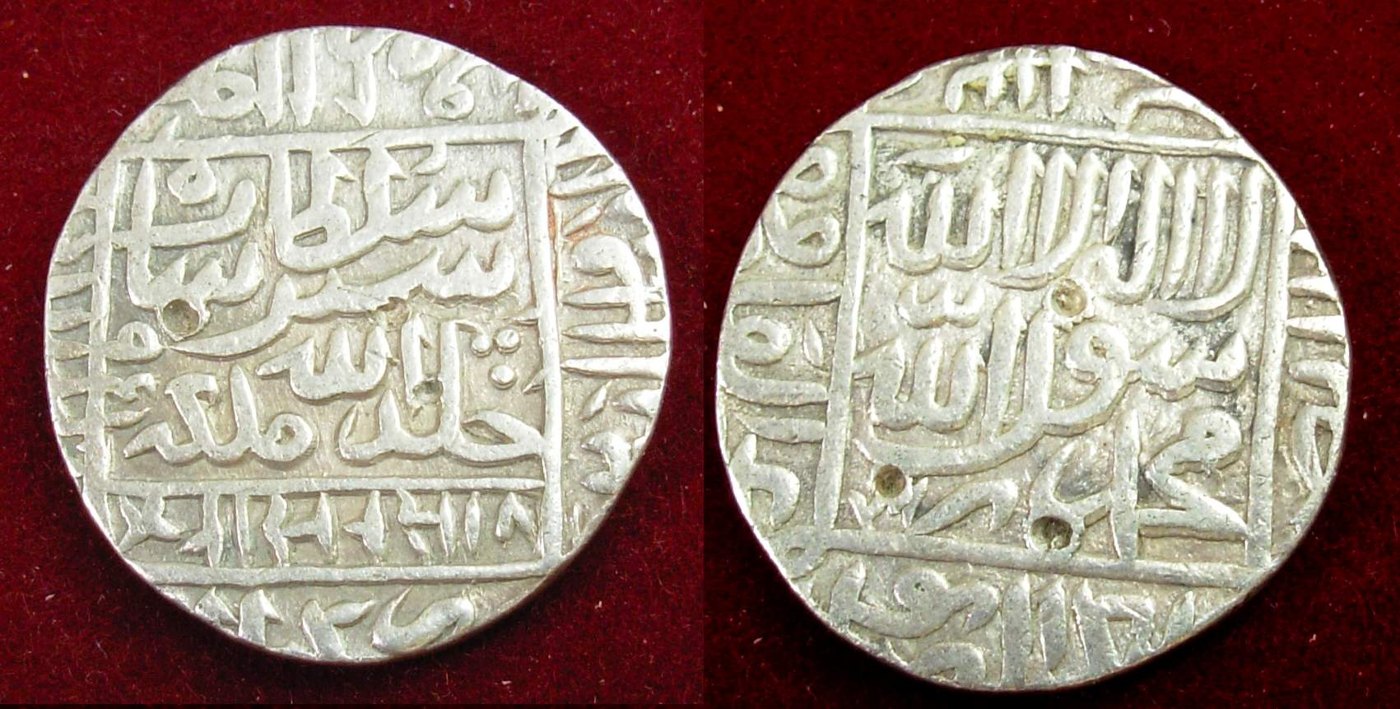

Mughal rulers continued striking rupees at numerous mints. A ruler’s name, a date and a mint inscription were far more than incidental details: they located an issue and identified the authority behind its metal. Lahore became an important part of this monetary geography. The rupee subsequently survived changing political control in Punjab and the expansion of British rule.
British administration gradually organised coinage and paper currency across British India. The Paper Currency Act of 1861 gave the government a monopoly of note issue; the Reserve Bank of India assumed currency management when it began operating in 1935. This was the system in place at Partition. The continuing word “rupee” would soon conceal a fundamental break: two sovereign authorities would issue different currencies sharing the same name.
SBP Museum — Suri Dynasty · Shailendra Bhandare, A Silvered Past — Ashmolean / Oxford · Reserve Bank of India — Evolution of Paper Currency · Reserve Bank of India — Brief History
1947: keeping money moving through Partition
At Pakistan’s independence in August 1947, a central bank could not be created in a few days. It needed staff, reserves, accounts and a distribution network able to supply commercial banks. Mass displacement and disrupted trade made continuity of payment especially important. A familiar banknote retained an immediate practical value even when political authority had changed.
The RBI temporarily performed central banking functions for Pakistan. The original timetable extended to the end of September 1948, but the institutional separation actually took place earlier, at the end of June. This was not joint management by the RBI and an SBP already operating since August 1947: Pakistan’s central bank still had to be established.
The history of the paper did not exactly match that of the institutions. Inherited British Indian notes remained in use, adapted types followed, a national central bank opened and new designs appeared. Reducing this sequence to a single “creation of the rupee in April 1948” obscures the practical work through which monetary independence was built.
Reserve Bank of India — Brief History · United Nations — Economic Survey of Asia and the Far East 1948 · SBP — Inauguration, 1 July 1948
1948: three dates, three different steps
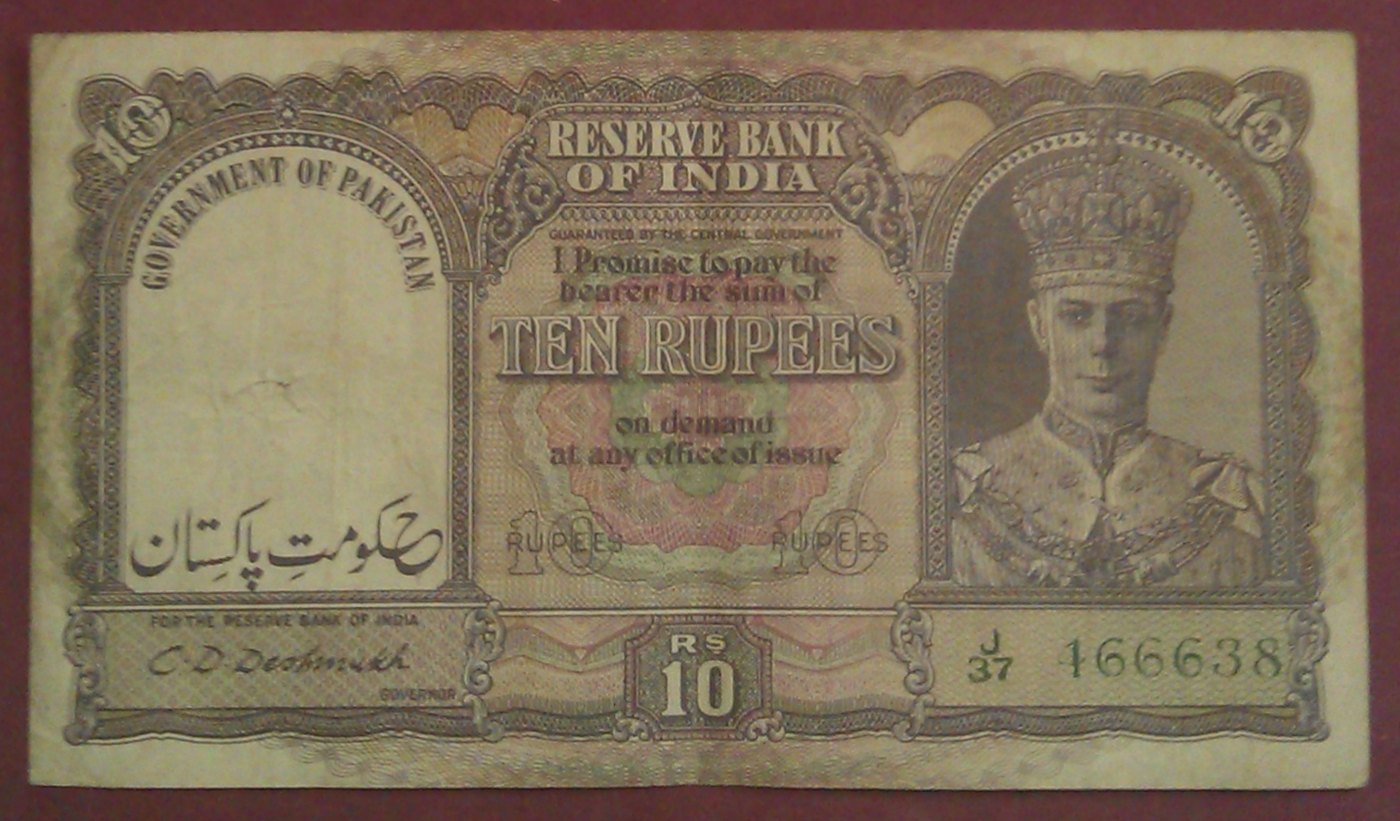
On 1 April, Indian-type notes specially adapted for Pakistan entered circulation. George VI’s portrait reveals the inherited production system, while English and Urdu inscriptions identify the Pakistani government. These are often called “overprinted notes”. The SBP Museum makes a more precise distinction: the official issue used altered printing plates, rather than an inscription added after printing.

On 1 July, Muhammad Ali Jinnah inaugurated the State Bank of Pakistan, with Zahid Husain as its first governor. Pakistan now had its own functioning monetary authority. The RBI ceased acting as its central bank.
On 1 October, an emergency series of Pakistani designs appeared in 5-, 10- and 100-rupee denominations, manufactured in Britain by Thomas De La Rue. Crescent and star displaced the British monarch as the identifying emblem. These closely spaced steps explain why several very different banknotes can all belong to the currency’s founding year.
SBP Museum — Pakistani Currency · United Nations — Economic Survey of Asia and the Far East 1948 · SBP — Inauguration, 1 July 1948
Lahore and Karachi: manufacturing independence
Monetary sovereignty also depends on workshops. At Lahore, a wartime mint became the Pakistan Mint after independence. Its official history dates the start of operations to September 1943. That date must be distinguished from the first national Pakistani coins, issued in 1948.

Paper money followed a separate industrial route. Pakistan Security Printing Corporation was established on 10 March 1949 with Thomas De La Rue’s participation. More than an overseas supplier was at stake: printing banknotes required security paper, inks, engraving expertise, inspection and protected delivery. The creation of Security Papers Limited in 1965 strengthened domestic production by reducing reliance on imported security paper.
A coin is struck between metal dies; a banknote combines printing processes with features built into its paper. The mint and the security printer are therefore different institutions. The central bank, meanwhile, manages issue and circulation. Together they connect public authority, industrial skill and the everyday act of handing over money.
Pakistan Mint — History · Pakistan Security Printing Corporation — About us
The scripts of a country in two parts
Pakistan in 1947 comprised two parts separated by Indian territory. East Pakistan covered most of what is now Bangladesh. Urdu, Bengali and English gave the currency issued for this state several linguistic identities. Bengali lettering on a Pakistani note was not a foreign curiosity: it belonged to the rupee’s own history.
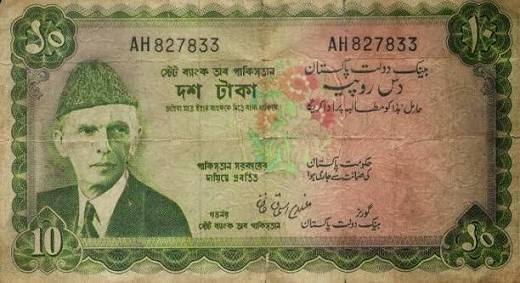

An inscription helps identify a denomination, but it also makes a public statement about who is represented. Banknote language therefore touches political belonging. A collection can be read through the choice of scripts, their size and their placement as well as through the central portrait.
Landscapes and economic activities performed a similar role. A jute-laden boat or tea gardens evoked the eastern wing, while other monuments located the story in Punjab or Sindh. Together they assembled a national geography on paper. These images do not demonstrate equal regional access to resources or political agreement among inhabitants. A banknote records the representation selected by its issuer rather than the whole society.
1961: learning to count in one hundred paisas
At independence the rupee was divided into 16 annas, with 4 pice to the anna, making 64 pice to the rupee. Catalogues need careful reading: pice, paisa and their plurals do not always represent the same fraction across different dates. A coin must be read within its own system.
On 1 January 1961, Pakistan introduced decimal coinage: one rupee now equalled 100 paisas. The rupee remained the principal unit; its subdivisions changed. This was not the removal of zeros from prices or the creation of a “new rupee” worth a number of old ones.
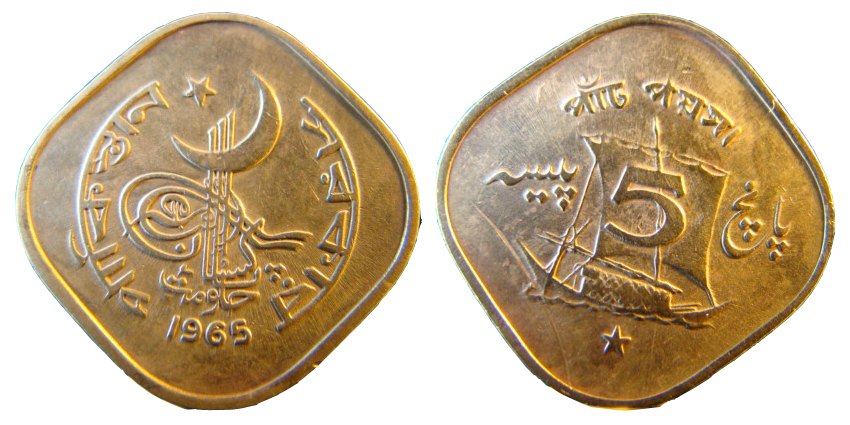

A quarter rupee illustrates the new arithmetic: formerly 4 annas, it became 25 paisas. Shopkeepers now had to reckon in hundredths. The reform reached even small purchases through the new coins. One-, five- and ten-paisa pieces appeared in 1961, followed by 25 and 50 paisas in 1963.
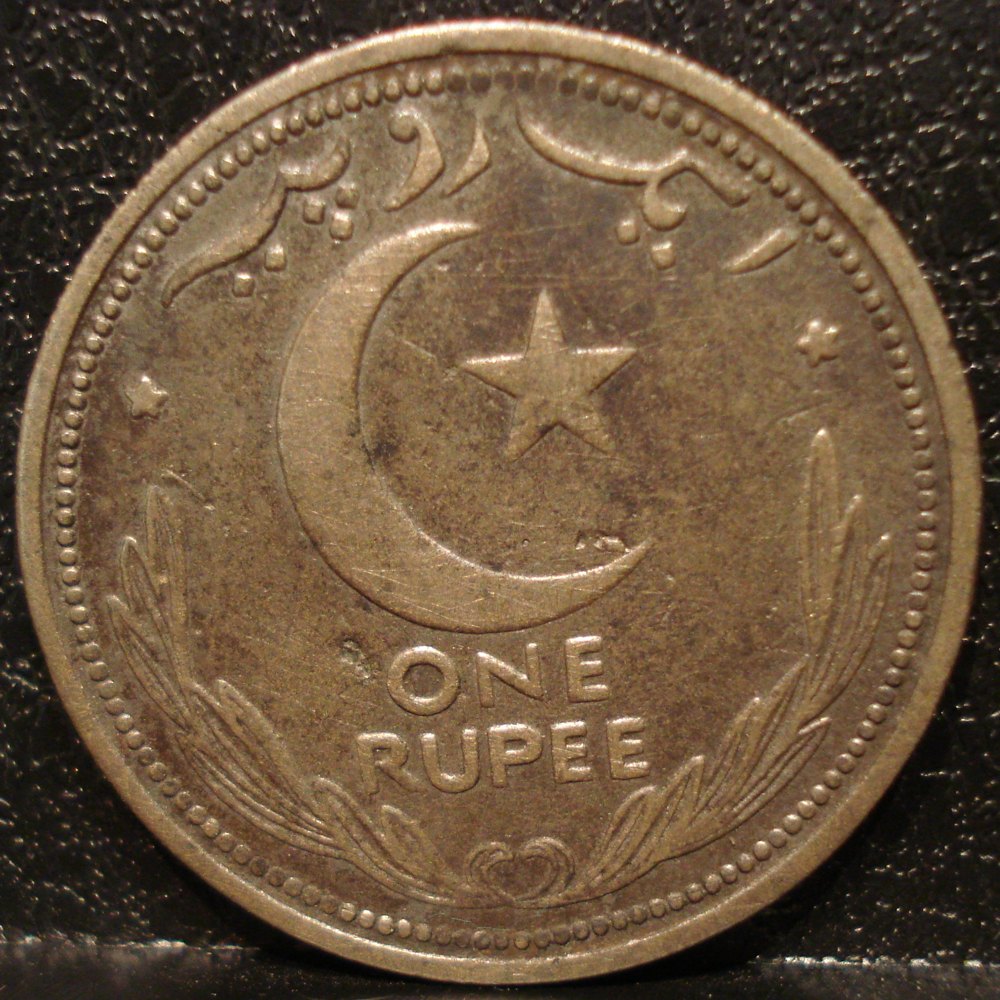
Shape and size helped distinguish denominations. A coin speaks through more than its motif: weight, diameter and outline provide information to the hand as well as the eye. The small 1965 piece shown here also preserves the period’s use of several scripts.
Pakistan Mint — History · Pakistan Mint — Catalogue of circulating coins
The banknotes that travelled on pilgrimage
A distinctive branch of the rupee accompanied pilgrims. From 1950, special Haj notes, or Hajj banknotes, were provided for use abroad in connection with pilgrimage. They addressed the practical problem of controlling currency leaving the country. These were specialised issues with a designated purpose rather than a new national currency.
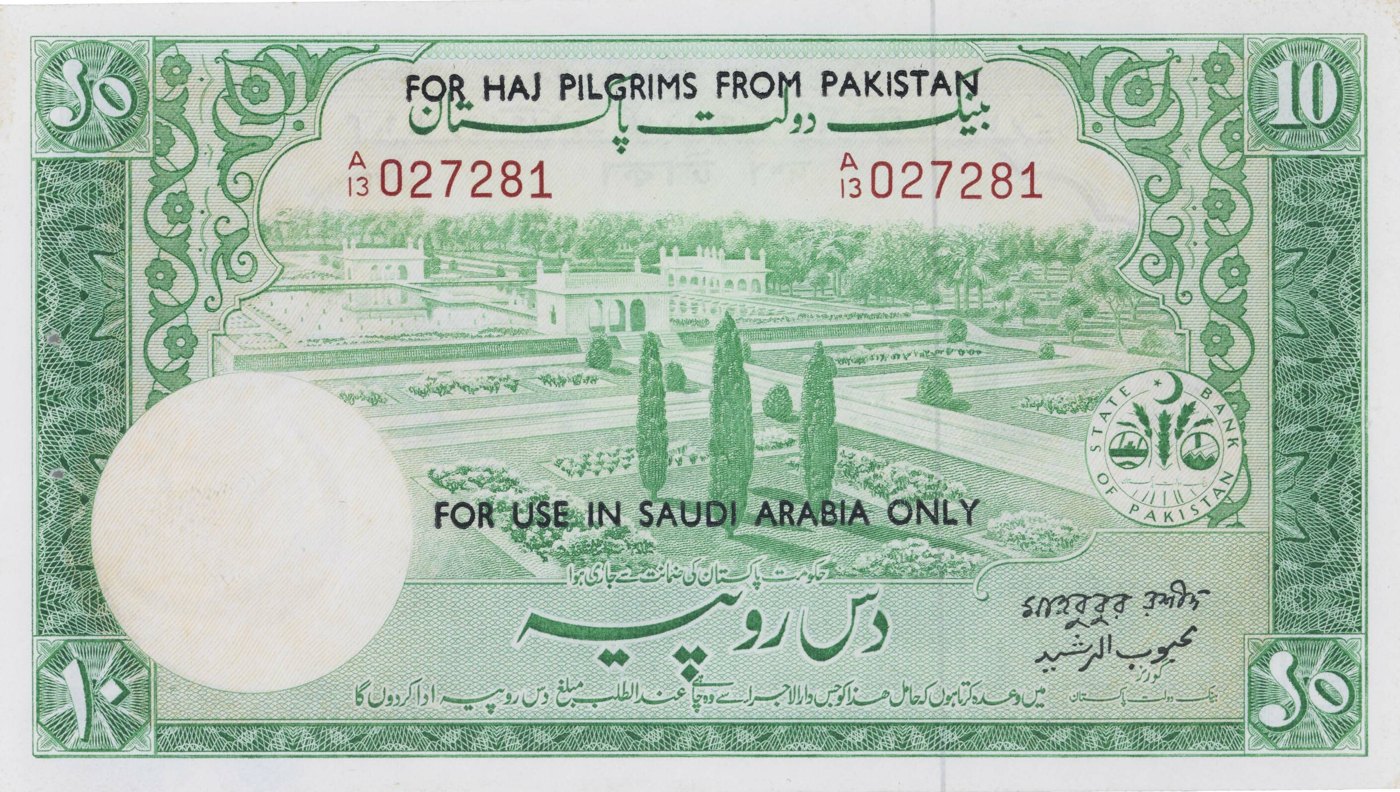

The inscription specifying use by Pakistani pilgrims changes how the note must be read. The illustrated ten-rupee note says “Saudi Arabia only”; other issues also mention Iraq. Unlike an ordinary rupee note, it was not legal tender within Pakistan. Its function depended as much on that printed restriction as on the denomination.
The ten-rupee note photographed by the Khalili Collections bears serial A/13 027281. Its garden scene and restricted-use wording combine a view of the country with an overseas destination. It offers a clear view of money intended for a particular route rather than domestic circulation. Its historical interest lies where religious travel, foreign-exchange administration and printing meet. Issues and variants appeared over time: the scheme’s introduction in 1950 does not automatically date every surviving example.
SBP Museum — Haj Notes · Khalili Collections — 10 Rupee Hajj Banknote, ARC.MX 697
Jinnah and the rupture of 1971
Muhammad Ali Jinnah’s portrait became a major element in the currency’s identity. The 100-rupee note introduced on 24 December 1957 combined his likeness with a watermark and security thread. The founder’s image thus linked national memory with note recognition; it had not appeared on all the first issues of 1948.
The war of 1971 and Bangladesh’s independence broke up the monetary space shared by Pakistan’s two wings. Currency alone cannot explain the conflict: political, linguistic, military and social issues extended far beyond the central bank. Paper money nevertheless preserves visible evidence of the rupture, in inscriptions and withdrawal measures alike.
In June 1971 Pakistani authorities withdrew 100- and 500-rupee notes, together with notes carrying specified political inscriptions. In Bangladesh the transition was not instantaneous: an order dated 4 March 1972 still provided for the withdrawal of Pakistani 50-rupee notes from 5 March. This documentary detail distinguishes political independence from the practical replacement of cash.
The scripts and landscapes of later issues reflected Pakistan after separation. A Bengali-script note consequently became evidence of a former national space rather than merely an obsolete graphic design.
SBP Museum — Pakistani Currency · SBP — Rupay ko Pehchano · Bangladesh — Currency (Demonetisation) Order, 4 March 1972
Changing value, continuing name
The rupee’s external history is not a continuous downward line from independence. In 1949 Pakistan did not follow sterling’s devaluation, while India did. The two rupees therefore no longer exchanged at their previous parity. In economies still closely connected, a change in their relative value could alter trade in cotton, jute and manufactured goods. Pakistan subsequently devalued in 1955.
Following the rupture of 1971, a major devaluation came in 1972, followed by a dollar peg. In January 1982 the fixed peg gave way to managed floating. These changes concerned the determination of the rupee’s external value. They were not redenominations exchanging a thousand old rupees for a new one.
Banking reform is another part of the story. Islamic finance policies pursued from the late 1970s concerned contracts, remuneration and institutions. They did not create a second rupee. A sum remained denominated in PKR whether financed through a conventional arrangement or an Islamic financial contract.
Four things must be kept separate: the currency’s name, purchasing power, external exchange rate and physical form. A new denomination can appear without a new monetary unit; a devaluation can occur without a redesigned note. Numismatics helps interpret these changes, but a single banknote cannot measure living conditions.
Federal Reserve — Pakistan’s Exchange Rate Policy, 1957 · IMF — Macroeconomic Policies and the Balance of Payments in Pakistan: 1972–1986 · SBP — Islamic Banking
Reading a country on the back of its notes
Jinnah’s portrait provides continuity on the front; the backs travel through different regions and periods. The family introduced from 2005 combines archaeology, architecture, mountains and institutions. A denomination alone does not identify a picture, however: monuments can move between values when a series changes.
The table below concerns that particular family rather than every Pakistani issue. It explains the motifs without claiming to be a permanently valid list of legal-tender cash.
| Rupees | Motif | Historical reading |
|---|---|---|
| 10 | Bab-e-Khyber | The gateway at the Khyber Pass, a landmark of movement between regions. |
| 20 | Mohenjo-daro | The archaeology of the Indus civilisation, long predating Pakistan. |
| 50 | K2 / Karakoram | A summit within the high-mountain landscape. |
| 100 | Ziarat | The residency associated with Jinnah’s final months. |
| 500 | Badshahi Mosque, Lahore | A major monument of Mughal architecture. |
| 1 000 | Islamia College, Peshawar | Education as part of the national heritage. |
| 5 000 | Faisal Mosque, Islamabad | The capital and its modern religious architecture. |
Comparison with earlier generations makes the choices more revealing: Mohenjo-daro appeared on an old ten-rupee note, while Islamia College appeared on an old hundred. Visual identity travels through reassignment as well as repetition. A monument remains recognisable as its frame, colour and denomination change.
Security is part of the design too: portrait watermarks, security threads, raised printing and optical features vary by denomination. They are not identical on every note. The issuer’s specifications should therefore be read denomination by denomination.
SBP — 10 rupees, security features · SBP — 20 rupees, security features · SBP — 50 rupees: Karakoram · SBP — 500 rupees, security features · SBP — 1,000 rupees · SBP — 5,000 rupees · SBP — Historical banknote features
75 rupees: two anniversaries, two stories
2022: the country’s foundation
The green 75-rupee banknote marked the 75th anniversary of independence. Unveiled in August 2022, it became available to the public on 30 September 2022. Its front brings together Muhammad Ali Jinnah, Fatima Jinnah, Allama Muhammad Iqbal and Sir Syed Ahmad Khan. Figures from different generations illustrate the intellectual and political roots of the Pakistan movement. On the back, a markhor and a deodar tree carry a message about protecting the natural environment.
2023: the central bank’s foundation
The blue 75-rupee banknote issued on 4 July 2023 instead celebrated the SBP’s establishment in 1948. Jinnah appears alongside Sadequain’s calligraphic interpretation of the bank’s headquarters. Fatima Jinnah is on the back with solar and wind-energy motifs. Institutional memory is connected to women’s access to banking and sustainable energy.
The denomination 75 does not mark a monetary reform. It turns an anniversary into a face value. The two notes tell different stories one year apart. Their significance extends beyond collectors’ interest in scarcity: they show an institution connecting its past with contemporary ambitions.
SBP — 75 rupees, Independence anniversary · SBP — Issue of the commemorative 75-rupee note, 2022 · SBP — 75 rupees, central bank anniversary · SBP — Issue of the commemorative 75-rupee note, 2023
What a monetary object can tell us
Reading money means combining clues. The issuer supplies an institutional setting, the signature may narrow a period, the script identifies an audience and the motif opens a route into cultural history. A coin’s date and a banknote design’s year do not serve exactly the same purpose. A collection photograph cannot always distinguish every variety.
Even an official information sheet may be old. An SBP document headed “Banknotes and coins under circulation” describes the green 1976 ten-rupee note with Mohenjo-daro and an old hundred-rupee note showing Islamia College. In the following family those motifs appear on different denominations. The document’s heading is not enough: its contents must be placed within the appropriate issue generation.
Withdrawing an old design is also different from abolishing a denomination. The procedure announced in 2015 for older ten-, fifty-, hundred- and thousand-rupee designs did not end those values in newer series. Recognising that distinction prevents a historical collection from being mistaken for a list of spendable cash.
From Sher Shah’s silver coin to commemorative paper, the Pakistani rupee records several kinds of continuity: a name shared with other regional currencies, a national issuing authority built in 1948 and images that tell stories about languages, places and collective memory. These tangible objects give the currency’s history its depth.
SBP — Historical banknote features · SBP — Withdrawal of old design banknotes, 2015
Sources and credits
Documentary review: 15 October 2026. Historical sources are read in their publication context; they do not supply commercial exchange rates.
- SBP Museum — numismatic collections
- SBP Museum — Suri Dynasty
- Shailendra Bhandare, A Silvered Past — Ashmolean / Oxford
- Reserve Bank of India — Evolution of Paper Currency
- Reserve Bank of India — Brief History
- United Nations — Economic Survey of Asia and the Far East 1948
- SBP — Inauguration, 1 July 1948
- SBP Museum — Pakistani Currency
- SBP — Rupay ko Pehchano
- Pakistan Security Printing Corporation — About us
- Pakistan Mint — History
- Pakistan Mint — Catalogue of circulating coins
- SBP Museum — Haj Notes
- Khalili Collections — 10 Rupee Hajj Banknote, ARC.MX 697
- Bangladesh — Currency (Demonetisation) Order, 4 March 1972
- Federal Reserve — Pakistan’s Exchange Rate Policy, 1957
- IMF — Macroeconomic Policies and the Balance of Payments in Pakistan: 1972–1986
- SBP — Islamic Banking
- SBP — Historical banknote features
- SBP — Withdrawal of old design banknotes, 2015
- SBP — 75 rupees, Independence anniversary
- SBP — Issue of the commemorative 75-rupee note, 2022
- SBP — 75 rupees, central bank anniversary
- SBP — Issue of the commemorative 75-rupee note, 2023
- SBP — 10 rupees, security features
- SBP — 20 rupees, security features
- SBP — 500 rupees, security features
- SBP — 50 rupees: Karakoram
- SBP — 1,000 rupees
- SBP — 5,000 rupees
Rights, sources and captions for the six photographs: images-manifest.json.