A silver coin struck in northern India, a Mauritian banknote, an Indonesian rupiah and a Maldivian rufiyaa: their names echo one another, but their histories are distinct. Understanding this family means following objects, trading routes and the authorities that gave money its value.
A name that remembers silver
The rupee did not appear in a world without money. India already had a long history of coins, weighed metals and mints when Sher Shah Suri ruled from 1540 to 1545. His silver rupiya became a crucial landmark in the subcontinent’s monetary history. The Reserve Bank of India’s museum gives its weight as 178 grains, or roughly 11.5 grams.
The word belongs to an older linguistic history associated with worked silver. An ancient name, however, does not mean that one unchanged coin survived across the centuries. Weight, fineness, issuing authority and purchasing power must each be considered separately.
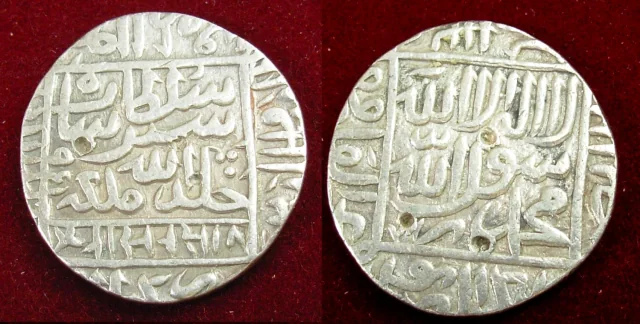

The Mughal emperors continued and reshaped this system. Their coins bear rulers’ names, dates, mints and inscriptions. They reveal a political geography as well as a history of trade. A rupee of Akbar and a modern banknote belong to the same long narrative; they are not interchangeable objects.
From the mints to Indian Ocean ports
Money travels with merchants, soldiers, workers and administrations. A coin can circulate far from its mint because people recognise its metal and weight. Such practical trust does not erase borders or the variety of ways people pay.
The Indian Ocean connects societies that count in different units. In the Maldives, cowries and larins tell stories of exchange before national banknotes. The name laari, the rufiyaa’s subdivision, preserves the memory of the larin, a silver currency whose forms included bent lengths of wire. In Mauritius and Seychelles, coins and notes record successive trading networks and administrations.
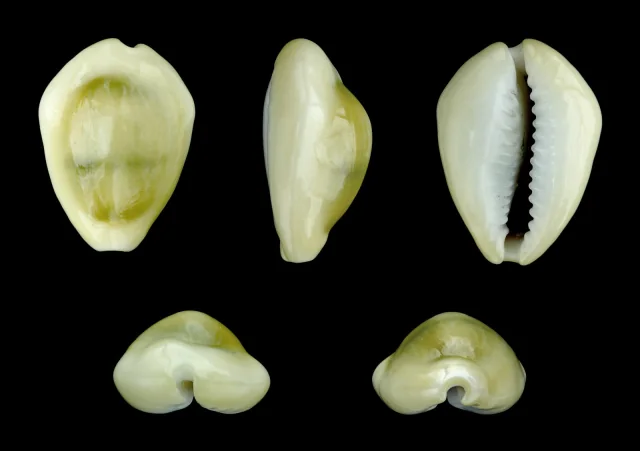

Words change as they travel too. Rupee, rupiah and rufiyaa have a family resemblance, but a single arrow from an Indian coin to every present-day system would be misleading. Local histories have their own milestones, practices and breaks.
British Museum · Maldivian money cowries · Maldives Monetary Authority · Monetary history
A common currency, a statement of power
In nineteenth-century India, the East India Company’s monetary unification was a major turning point. Legislation in 1835 established uniform coinage for its territories. It did not instantly abolish every princely state currency: political and monetary arrangements remained more varied than a hurried timeline might suggest.
Paper money followed a different path. Banks issued notes before the Paper Currency Act of 1861 reserved that right to the Government of India. The arrival of banknotes, the organisation of their issue and the later creation of a central bank are separate events.
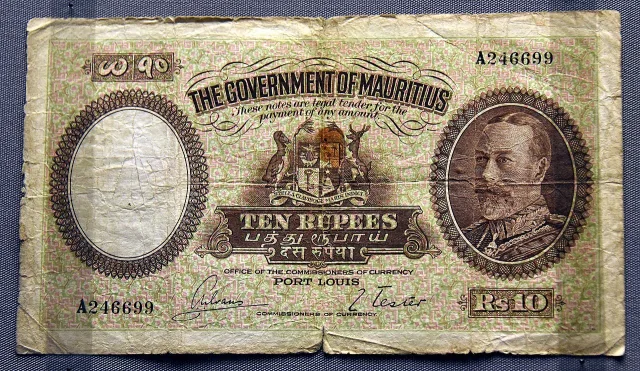
In Sri Lanka, then Ceylon, the earliest experiments with paper money date to Dutch administration. Surviving old copper coins also speak of modest purchases, far from the highest-value collectors’ pieces. In Mauritius, ports, migration and changing administrations give the rupee its own island story.

RBI · British Indian coinage · RBI · Early paper issues · Central Bank of Sri Lanka · Monetary history
Independence written on paper
In the twentieth century, issuing money became a particularly visible expression of sovereignty. Partition in 1947 opened the story of the Pakistani rupee: transitional notes and then the first national issues brought political change into everyday wallets. Nepal followed a different course, with royal coins, Treasury notes and central bank issues marking distinct stages.
Indonesia shows why the name alone is not enough. Its archipelago used the currencies of kingdoms, colonial guilders and occupation money before Oeang Repoeblik Indonesia. ORI entered circulation on 30 October 1946; the date of 17 October 1945 printed on the first notes must not be mistaken for the day people could first use them.
In the Maldives, the national story runs through the first banknote family and the later establishment of the Maldives Monetary Authority. In Seychelles, changes of sovereignty and institutions can be read through portraits, coats of arms and, later, biodiversity. None of these histories amounts to a simple copy of India’s model.
State Bank of Pakistan · Banknote history · Indonesian Ministry of Finance · History of ORI
Look at a currency, read a country
Coins and banknotes are small public archives. A portrait identifies someone chosen for recognition; a bird, mountain, building or craft offers an image of the country. Languages and scripts also tell us whom the currency addresses. Wear is a reminder that these objects were first made to pass from hand to hand.
Material matters as much as design. Silver, copper, alloys, paper and polymer meet different needs for cost, durability and security. A new banknote does not necessarily invalidate every earlier issue. A series date is not always a circulation date; a withdrawn coin remains a historical document.
The eight dossiers that follow retain this attention to objects: old coins, transitional notes, tables of banknote families and descriptions of recent issues. Every illustration has a caption and credit. Where an image is not reproduced, references allow readers to continue their examination with the issuer or collection.
Related names do not imply equal values. INR, IDR, MVR, MUR, NPR, PKR, SCR and LKR identify eight distinct currencies. For travellers and readers alike, the country and currency code are the right starting points.